

Key Takeaways - A leasing letter of intent (LOI) is a preliminary, generally non-binding document that proposes the key terms of a lease, such as rent, lease term, and security deposit, before a formal agreement is signed. - Most LOI terms are non-binding, meaning either party can typically walk away; however, specific provisions ,such as confidentiality and exclusivity clauses, may carry legal weight if explicitly stated. - LOIs are used for both commercial and residential leases, though commercial LOIs are generally more detailed, covering items like tenant improvement allowances, CAM charges, and rent escalations. - A leasing letter of intent is not the same as a lease agreement ,the LOI outlines proposed terms and guides negotiations, while a signed lease is the legally enforceable final contract. - 360 Legal Forms makes it straightforward to create an attorney-vetted leasing letter of intent ,no legal experience needed, downloadable in minutes as a PDF or Word document.
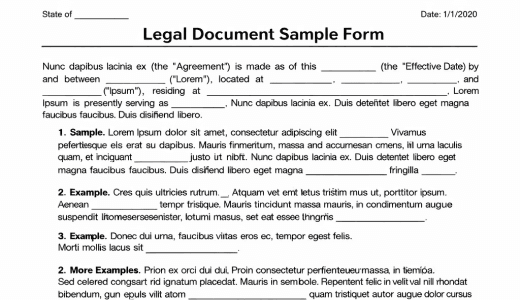
A leasing letter of intent is a preliminary document that outlines the proposed terms of a rental arrangement before either party commits to a formal lease. Whether you're a business owner securing commercial space, a landlord screening a serious tenant, or an individual arranging a residential rental, this form establishes the foundation for your lease negotiation in writing. 360 Legal Forms provides an attorney-vetted leasing letter of intent template you can customize to your situation and download instantly.
What Is a Leasing Letter of Intent?
A leasing letter of intent (LOI) is a written document that summarizes the key proposed terms between a landlord and a prospective tenant, covering items like rent, lease duration, and security deposit, before either party signs a binding lease agreement. It is generally non-binding, meaning it does not obligate either party to complete the transaction. Instead, it demonstrates serious interest, aligns expectations, and serves as a roadmap for drafting the formal lease. Under U.S. law, a lease grants a tenant the right to possess and use property for a specified period in exchange for rent ,and the LOI is the document that sets the stage for that agreement.
In most cases, an LOI is used at the earliest stage of lease negotiations. It allows both parties to identify areas of agreement and potential deal-breakers before investing time and money in legal fees and formal drafting. Courts generally treat the LOI as a guide for negotiation rather than an enforceable obligation, as long as the document clearly states its non-binding nature. The U.S. General Services Administration's Leasing Desk Guide provides authoritative guidance on how LOI terms are treated in formal lease acquisition contexts.
Commercial LOI vs. Residential LOI, Key Differences
The most important distinction: a commercial leasing letter of intent is typically far more detailed than a residential one, because commercial lease negotiations involve more complex financial and operational terms.
A commercial LOI generally covers base rent, rent escalations, tenant improvement allowances, common area maintenance (CAM) charges, lease type (gross, modified gross, or triple net/NNN), parking rights, exclusivity clauses, and renewal options. These terms directly affect a business's cash flow and operations, making it critical to nail them down early.
A residential LOI is more straightforward. It typically covers the monthly rent amount, lease start and end dates, security deposit, and any key conditions, such as pet policies or utility responsibilities. Many residential rentals skip the LOI entirely and move directly to a lease agreement, though an LOI can be useful when a tenant wants to reserve a unit ahead of a move-in date.
Other Names for a Leasing Letter of Intent
Depending on your property type or state, a leasing letter of intent may also be referred to as:
- Lease Proposal Letter
- Rental Intent Letter
- Property Lease LOI
- Letter of Intent to Lease Commercial Property
- Commercial Lease Letter of Intent
- Letter of Intent to Rent
- Lease Offer Letter
- Memorandum of Lease Terms
360 Legal Forms offers a full library of letter of intent templates, including options for real estate, business purchases, and contractor agreements, so you can find the right document for your situation.
Who Needs a Leasing Letter of Intent?
A leasing letter of intent is useful for anyone entering lease negotiations who wants to put proposed terms in writing before committing to a formal agreement.
- Business owners and commercial tenants: Use an LOI to propose rent, lease term, build-out needs, and operating cost responsibilities before a formal commercial lease is drafted. The U.S. Small Business Administration notes that commercial space leasing is one of the most significant financial decisions a small business makes, making an LOI an important first step.
- Landlords and property managers: Use an LOI to vet serious applicants, establish a clear starting point for negotiations, and avoid back-and-forth on major terms before investing in a full lease draft. A residential rental application can help screen tenants before the LOI stage.
- Residential tenants: Use an LOI to reserve a rental unit ahead of a move-in date, especially when the lease agreement won't be finalized for several weeks. It provides written confirmation of the agreed rental terms.
- Real estate brokers and agents: use an LOI on behalf of their clients to formalize the tenant's interest and set the terms for the lease negotiation.
An LOI is generally not required when a landlord and tenant are ready to sign a full lease agreement immediately. It is most valuable when there is a gap between initial interest and the formal signing , whether due to build-out timelines, financing approvals, or ongoing negotiation.
Landlord or tenant ,create your leasing letter of intent at 360 Legal Forms in minutes
What Does a Leasing Letter of Intent Include?
A well-drafted leasing letter of intent covers the key business terms of the proposed lease. The table below outlines the standard fields, what to include, and why each one matters.
How to Fill Out a Leasing Letter of Intent (Step by Step)
Step 1: Identify the Parties
Enter the full legal names, addresses, and contact information of both the landlord (lessor) and the prospective tenant (lessee). If a broker is involved, note their name and role as well.
Step 2: Describe the Property
Provide the full property address and a description of the space being proposed for lease ,including the unit number, floor, square footage, or any other identifying details. For commercial properties, being specific here prevents confusion during lease drafting.
Step 3: Propose the Lease Term
State the proposed start date, end date, and total lease duration. If renewal options are part of the proposal, include the number of renewal periods and the proposed length of each.
Step 4: State the Rent and Escalation Terms
Enter the proposed monthly base rent and the date it is due each month. For commercial LOIs, include any agreed rent escalation structure , such as a fixed annual increase or a Consumer Price Index (CPI) adjustment.
Step 5 : Address the Security Deposit
State the proposed security deposit amount and the conditions under which it is refundable. In most cases, the security deposit is due upon signing the formal lease agreement ,not the LOI itself.
Step 6: Include Tenant Improvement and CAM Terms (Commercial Leases)
If the landlord is offering a tenant improvement allowance (TIA), specify the dollar amount and any restrictions on its use. If common area maintenance (CAM) charges apply, outline whether the tenant will pay a pro-rata share and how annual increases will be capped.
Step 7: Add the Exclusivity Clause (If Applicable)
Include a clause stating that the landlord agrees not to market the space to other prospective tenants for a defined period ,typically 30 to 60 days ,while both parties negotiate in good faith toward a formal lease.
Step 8: Insert the Non-Binding Statement
This is one of the most important steps. Clearly state that the LOI is not a lease and is not legally binding on either party, and that all terms are subject to finalization in a formal lease agreement. Without this clause, courts in some jurisdictions may treat an LOI as an enforceable contract if it contains all the key terms of a deal.
Step 9:Sign and Date the Document
Both the landlord and tenant should sign and date the LOI. Witnesses and notarization are generally not required for a leasing letter of intent, since it is typically non-binding ,but check your state's requirements to confirm.
How Is a Leasing Letter of Intent Different from a Lease Agreement?
A leasing letter of intent and a lease agreement serve two different functions in the rental process, and understanding the difference protects both landlords and tenants.
A leasing letter of intent is a preliminary document that proposes the key terms of a potential rental arrangement. It is generally non-binding, meaning neither party is legally required to complete the lease based on the LOI alone. It is used to align expectations and guide negotiations before a formal agreement is drafted.
A lease agreement is the legally binding contract that governs the landlord-tenant relationship. It includes the full terms and conditions of the rental ,and is enforceable in court once signed by both parties. Per Cornell Law's Legal Information Institute, a rental agreement must include identification of both parties, the property, payment terms, duration, and termination rules ,all of which the LOI helps establish in advance.
Think of the LOI as the roadmap and the lease as the contract. Both play important roles: the LOI streamlines negotiations and reduces the risk of surprises during lease drafting, while the lease locks in every detail with legal enforceability. Once the LOI terms are agreed upon, those terms typically serve as the starting point for drafting the formal commercial lease agreement or residential lease agreement.
360 Legal Forms offers attorney-vetted LOI and lease templates.
How to Create a Leasing Letter of Intent with 360 Legal Forms
Creating your leasing letter of intent with 360 Legal Forms is straightforward ,no legal background required. Simply answer a few guided questions about the parties, the property, and your proposed lease terms. Once complete, download your customized document as a PDF or Word file instantly from your secure online account.
Our form generator walks you through every required field, so nothing important gets missed. You and the other party can also sign the document online using our built-in e-signature tool.
What Information Will I Need to Create My Leasing Letter of Intent?
To create your document with 360 Legal Forms, you will need the following details:
- Full legal names and contact information of the landlord and tenant
- Property address and description (including square footage, unit number, or floor)
- Proposed lease start and end dates
- Monthly base rent amount and due date
- Rent escalation terms (if applicable)
- Security deposit amount
- Tenant improvement allowance amount (commercial leases)
- CAM charge structure (commercial leases)
- Exclusivity or no-shop period (if desired)
- Governing state law
- Any additional agreed terms or contingencies
Leasing Letter of Intent Terms
- LOI (Letter of Intent): A preliminary, generally non-binding document proposing the key terms of a lease.
- Lease Term: The proposed duration of the rental, including the start date, end date, and any renewal options.
- Base Rent: The fixed monthly rent amount agreed upon by the landlord and tenant.
- Rent Escalation: A scheduled increase in rent over time, typically set as a fixed dollar amount, percentage, or CPI-based adjustment.
- Tenant Improvement Allowance (TIA): Money contributed by the landlord to help a commercial tenant customize or build out the leased space.
- CAM Charges: Common Area Maintenance charges, fees paid by commercial tenants to cover their share of maintaining shared property areas such as lobbies, parking lots, and hallways.
- Exclusivity Clause: A provision in which the landlord agrees not to market the space to other tenants for a set period while lease negotiations are underway.
- Non-Binding Clause: A statement confirming that the LOI does not create a legally enforceable obligation on either party.
Signing Requirements
In most cases, both the landlord and the tenant sign and date the leasing letter of intent. Because a standard LOI is generally non-binding, witness signatures and notarization are typically not required. However, if specific provisions, such as a confidentiality or exclusivity clause, are intended to be legally enforceable, both parties should review those terms carefully before signing.
Check your state's requirements before finalizing your LOI, as practices may vary. 360 Legal Forms' built-in e-signature tool makes it easy for all parties to sign remotely, securely, and instantly.
What to Do With Your Leasing Letter of Intent
Once both parties have signed the leasing letter of intent, distribute a copy to each party, landlord and tenant, for their records. The LOI does not need to be filed with any government agency or court.
Use the signed LOI as the starting point for drafting your formal commercial lease agreement or residential lease agreement. The terms agreed upon in the LOI typically carry into the lease drafting process, so any points the parties want to revisit should be raised before the LOI is signed.
Store your signed copy in a secure location ,both physical and digital copies are recommended. If disputes arise during formal lease drafting, the LOI serves as a reference point for the parties' original intentions.
Create your leasing letter of intent now at 360 Legal Forms
Why Use 360 Legal Forms for Your Leasing Letter of Intent?
Attorney-Vetted and Customizable
Our leasing letter of intent templates are drafted and reviewed by experienced attorneys, giving you a professionally structured document without the hourly legal fees. Customize every field ,from rent amount to CAM terms ,to match your specific situation.
Works for All 50 States
Laws and leasing practices vary by location. Every 360 Legal Forms document is designed to work across all 50 states, with options to customize for your specific jurisdiction. Whether you're in California, Texas, New York, or anywhere in between, your LOI will reflect the right framework for your market.
Straightforward to Use ,No Legal Experience Needed
Pam Rogers, a verified 360 Legal Forms customer, found that the forms are "great customer service and easy to use" ,no legal background required. Our step-by-step questionnaire guides you through every field, and once complete, you can download your leasing letter of intent instantly as a PDF or Word document and sign online with our built-in e-signature tool.
Create your leasing letter of intent now ,free to start at 360legalforms.com
Conclusion
A leasing letter of intent is the first step toward a successful lease negotiation ,for landlords and tenants alike. By putting proposed terms in writing before the formal lease is drafted, both parties reduce the risk of surprises and protect their interests throughout the process. Whether you need a commercial lease letter of intent or a residential LOI template, 360 Legal Forms provides an attorney-vetted, customizable document you can complete and download in minutes. Start your leasing letter of intent today ,free to begin.