

Key Takeaways - A roommate agreement outlines rent splits, security deposit terms, utilities, house rules, and consequences for violations between co-tenants. - It is separate from the lease and does not bind the landlord. - Financial terms are generally enforceable in small claims court. Non-financial rules are harder to enforce. - All roommates must sign with their full legal name. - Roommates save an average of 44.4% on rent (SmartAsset, 2024). A signed agreement protects that arrangement. - The 360 Legal Forms template is free to start, attorney-vetted, and state-specific.
A roommate agreement is one of the most practical documents two or more co-tenants can sign before moving in together. Whether you are renting with friends or strangers, a basic roommate agreement puts shared expectations in writing, reduces conflict, and gives you a legal record if financial disputes arise. Start your free roommate agreement form.
Splitting a two-bedroom apartment with a roommate saves the average renter about $541 per month, or nearly $6,500 per year, across large U.S. cities, according to the SmartAsset 2026 Roommate Savings Study. In high-cost cities, savings climb much higher. Roommates in New York City save an average of $1,730 per month, and those in Jersey City, NJ save up to $1,490 per month. A written roommate agreement protects that financial arrangement from day one.
What Is a Roommate Agreement?
A roommate agreement is a legally recognized contract between people sharing a rental unit. It covers how rent is split, who pays which utilities, rules for shared spaces, guest policies, and what happens if someone moves out early. It is not the same as a lease. A Residential Lease Agreement is between the tenant and landlord. A roommate agreement is between the tenants themselves and does not bind the landlord. If you or your co-tenant is renting a shared commercial space, you may also need a commercial lease agreement to formalize those terms with your landlord.
Critical Distinction
A roommate agreement covers only co-tenant rules. It cannot override or replace the primary lease. Both documents are needed for full legal protection.
Other Names for Roommate Agreement
Depending on your state, a roommate agreement may also be called:
- Roommate Contract
- Roommate Agreement Contract
- Housemate Agreement
- Room Rental Agreement
- Cohabitation Agreement
Who Needs a Roommate Agreement?
Anyone sharing a rental unit needs one of the essential rental legal documents: the roommate agreement form. This includes college students in shared dorms, young professionals splitting rent, families taking in a boarder, and anyone co-signing a lease with a friend or stranger. Learn more about what to include in a roommate agreement in our resource guide.
What Does a Roommate Agreement Include?
How to Fill Out a Roommate Agreement
1. List All Parties
Include the full legal name and contact information of every person signing the roommate agreement contract.
2. Add the Effective Date and Lease Term
Enter the date the agreement takes effect and align the end date with the primary lease.
3. Confirm the Address
Enter the full address of the shared rental property.
4. Define Rent and Security Deposit Terms
Specify each roommate's share of the rent, the due date, and the payment method. Also state how the security deposit is divided among roommates, who holds it, and how deductions will be handled if one roommate causes damage or vacates early. A security deposit equal to one month's rent is a common standard.
5. Divide Utilities and Shared Costs
List every utility and shared expense and assign responsibility or percentage to each roommate.
6. Set House Rules
Cover quiet hours, overnight guest duration (a common standard is 24 to 72 hours), pet rules, parking assignments, smoking and alcohol policies, and temperature preferences. Also state the early termination notice period. A 30-day written notice before a roommate vacates is the widely accepted standard, giving remaining tenants time to find a replacement.
7. Add Damage and Consequence Terms
State who is responsible for damages they cause and what happens if a roommate misses a payment or violates the agreement.
8. Sign With Full Legal Names
All roommates must sign the agreement. Notarization is not required but is recommended for high-value arrangements.
Get your roommate agreement template free to start
How to Create a Roommate Agreement With 360 Legal Forms
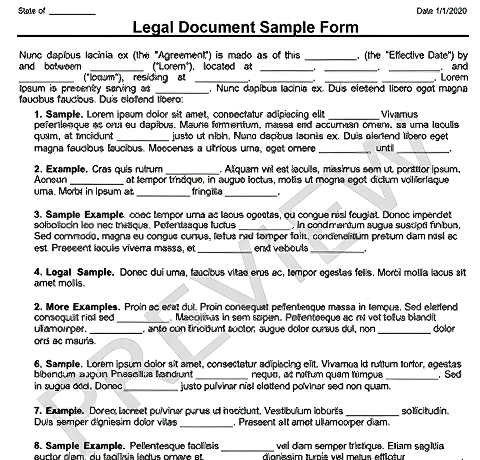
Answer a brief guided questionnaire as part of our legal document management process at 360 Legal Forms and your completed legal roommate agreement will be ready to download as a PDF or Word file. The form is attorney-vetted, state-specific, and customizable.
What Information Will I Need?
- Full legal names of all roommates
- Property address
- Lease start and end date
- Each roommate's rent share and due date
- Security deposit amount, each person's contribution, and refund terms
- Utility and shared cost breakdown
- House rules (guests, pets, quiet hours, smoking, alcohol, temperature, parking)
- Early termination notice period (30 days is standard)
- Damage compensation policy
- Consequences for non-payment or violations
- Landlord contact information (optional)
Roommate Agreement Terms
- Tenant: A person renting a property under a lease agreement.
- Co-Tenant: One of two or more people sharing the same rental unit under a single lease.
- Security Deposit: An upfront payment held to cover damages or unpaid rent. Roommates typically split the deposit proportionally. The deposit is generally refunded within 30 days of move-out, minus any deductions for damages caused by each individual.
- Subletter: A tenant who rents all or part of their unit to another person. If subleasing is involved, a separate Residential Sublease Agreement may be needed.
- Payment Schedule: How often and on what date rent or shared costs are due. Damage Compensation: The amount a roommate must pay for damages they cause to the property.
- Quiet Hours: Agreed times during which noise in the shared unit must be kept low. Early Termination Notice: Written notice a roommate gives before vacating. Thirty days is the widely accepted standard.
- Room Rental Agreement: Another name for a roommate agreement used in some states.
Roommate Agreement Signing Requirements
All roommates must sign the agreement using their full legal name. No notarization is required, though having a neutral witness present adds credibility. If the primary lease requires landlord approval for additional occupants, check your lease before adding a new roommate.
What to Do With Your Roommate Agreement
After signing, each roommate keeps a copy. Optionally, give one copy to the landlord for their records. Store the signed roommate agreement PDF in a secure location. If any terms change, such as a new roommate joining or a rent split adjustment, draft an updated agreement and have all parties sign again.
Secure your printable roommate agreement now
Why Use 360 Legal Forms for Your Roommate Agreement?
Easy Legal Documents at Your Fingertips
Answer a simple questionnaire and receive a complete, attorney-vetted roommate agreement template in minutes.
Easily Customized
Add your own house rules, rent structure, and damage terms. Sign online with the built-in e-signature tool.
Applicable to All 50 States
Every form is reviewed by experienced attorneys and tailored for your state's requirements.
Conclusion
A roommate agreement protects everyone in a shared living situation. It makes financial responsibilities clear, reduces conflict, and gives co-tenants a written record if disputes arise. Looking for more than just a roommate agreement? Explore our full collection of rental legal documents including lease addendums, inspection checklists, and more. Create your free roommate agreement form at 360 Legal Forms and download your completed roommate agreement PDF or Word file today. Only applicable fees apply.
Disclaimer: 360 Legal Forms is not a law firm and does not provide legal advice. This content is for informational purposes only. Laws vary by state. Check your state's requirements before finalizing any legal document.