

Key Takeaways - An action-required demand letter is a formal written notice that requests a specific action, such as payment of a debt, reimbursement of damages, or fulfillment of a contract obligation, before the sender initiates legal proceedings. - Sending an action-required demand letter before filing a lawsuit is strongly advisable and may be required in some states and for certain claim types, as courts may expect evidence of a good-faith attempt to resolve the matter first. - An action required demand letter is generally not legally binding on its own, but it creates a written record of your claim and establishes a deadline, which can serve as evidence if the matter goes to court. - Common uses include unpaid invoices, overdue loan repayments, breach of contract, returned checks (NSF), property damage disputes, and insurance claim settlements. - 360 Legal Forms provides an attorney-vetted action required demand letter template you can customize, download as a PDF or Word file, and send, without legal experience or attorney fees.
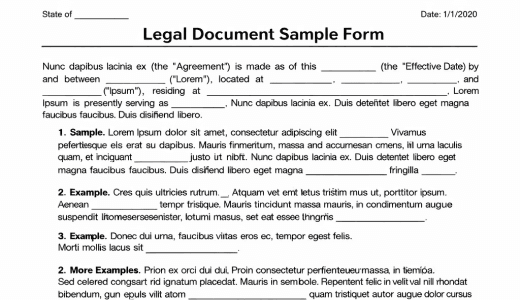
An action required demand letter is a formal written notice that tells the recipient they must take a specific action, pay an overdue balance, return property, or fulfill a contractual obligation within a set deadline, or face potential legal consequences. It is one of the most effective first steps a person or business can take before pursuing a dispute in court. 360 Legal Forms makes it straightforward to create a professional action required demand letter in minutes, no legal background required.
What Is an Action Required Demand Letter?
An action required demand letter is a written notice that formally documents a legal claim and demands performance or payment before legal action is taken. According to Cornell Law's Legal Information Institute, a demand letter initiates the legal dispute resolution process by seeking performance, abstention from a specific action, or monetary restitution to settle a claim.
The phrase "action required" signals urgency , it tells the recipient that this is not a courtesy reminder but a final formal notice with a deadline. In many cases, the letter alone is enough to prompt resolution, because it puts the recipient on notice that litigation is the next step.
An action required demand letter is a legal document in the sense that it creates a written record of your claim. Most courts and mediators will expect to see evidence that you attempted to resolve the matter in writing before filing a lawsuit.
Create your action required demand letter today , free to start at 360 Legal Forms.
Other Names for an Action Required Demand Letter
Depending on the situation and your state, an action required demand letter may also be called:
- Demand Letter for Payment
- Immediate Action Required Letter
- Letter of Demand (LOD)
- Action Required Notice
- Debt Demand Letter
- Collection Letter
- Breach of Contract Notice
- Debt Collection Letter
- Final Notice Before Legal Action
- Payment Demand Letter
Who Needs an Action Required Demand Letter?
An action required demand letter is useful for any individual or business that is owed payment or performance and wants to formally document their claim before pursuing legal action.
- Freelancers and contractors with unpaid invoices: When a client fails to pay for completed work, a demand letter for an unpaid invoice creates a written record of the outstanding balance and gives the client a final deadline to pay before you pursue small claims court or collections. The Fair Debt Collection Practices Act (FDCPA) applies to third-party debt collectors collecting consumer debts. It prohibits abusive, unfair, or deceptive practices, so understanding those rules can help you draft a more compliant letter and protect your rights.
- Lenders and private creditors seeking loan repayment: when a borrower misses payments or defaults on an informal loan, an action-required demand letter for loan repayment sets out the amount owed, the original terms, and the deadline for repayment before further action is taken.
- Business owners responding to contract breaches: Per Cornell Law's LII, a breach of contract occurs when a party fails to perform their promised obligations. An action required demand letter is typically the first formal step in resolving such a dispute, outlining what was promised, what went wrong, and what must be done to avoid litigation.
- Landlords owed back rent or damages: A properly drafted action required demand letter documents the tenant's outstanding obligation and establishes a deadline before further legal steps, such as an eviction notice, are taken.
- Anyone with an NSF (returned) check: If a debtor's check was returned due to non-sufficient funds, an action required demand letter puts the recipient on formal notice to make the payment good within the stated deadline.
- Insurance claimants: An action required demand letter is frequently used in insurance negotiations to formalize a settlement request and document the claimant's position before escalating to an attorney or lawsuit.
Create your action required demand letter at 360 Legal Forms
What Does an Action Required Demand Letter Include?
A well-drafted action required demand letter covers every element needed to communicate your claim and protect your position clearly. The table below outlines the standard fields, what to include, and why each one matters.
How to Fill Out an Action Required Demand Letter (Step by Step)
Step 1: Enter the Sender's Information
Provide your full legal name, mailing address, email address, and phone number at the top of the letter. If you are sending on behalf of a business, use the business's legal name and registered address.
Step 2: Identify the Recipient
Enter the full legal name and contact information of the person or entity you are demanding action from. Use their correct legal name , not a nickname or trade name , to ensure the letter has full legal effect.
Step 3: Date the Letter
Enter the date the letter is being written and sent. This date is the starting point for calculating the response deadline.
Step 4: Write the Statement of Facts
In clear, factual language, describe what was agreed upon, when the agreement was made, and what the recipient failed to do. Reference any supporting documents , such as a signed contract, invoice number, loan agreement, or promissory note. Avoid emotional language; courts respond to facts.
Step 5: State the Amount or Action Required
Clearly state the exact dollar amount owed, or the specific action the recipient must take. If interest or additional fees apply, state them separately and explain the basis for each charge.
Step 6: Set a Response Deadline
Specify the date by which the recipient must respond or comply. A deadline of 10 to 30 days from the date of the letter is standard in most situations. Be specific , "within 14 days of the date of this letter" is clearer than "promptly."
Step 7: Attach Supporting Documentation
Attach copies (not originals) of any documents that support your claim: the original contract, invoice, promissory note, text messages, or photos. List each attachment at the end of the letter.
Step 8: Include the Consequence Statement
State clearly that if the recipient fails to respond or comply by the deadline, you intend to pursue all available legal remedies , including filing a claim in court. Keep this statement factual and non-threatening in tone.
Step 9: Sign and Send by Certified Mail
Sign the letter and send it by certified mail with return receipt requested, so you have proof of delivery. Keep a signed copy for your records. Emailing or texting a demand letter is generally not recommended, as it is harder to prove receipt.
Use 360 Legal Forms to complete all of these steps quickly; your action required demand letter is ready to download as a PDF or Word document.
How Is an Action Required Demand Letter Different from Other Demand Letters?
An action required demand letter and a standard demand letter serve the same basic purpose, but the "action required" framing signals a formal, final notice rather than a general reminder.
A standard demand letter may be used at various stages of a dispute, early in negotiations or as one of several communications. It documents a claim but may not set a hard deadline or explicitly threaten litigation.
An action-required demand letter is typically sent as a final notice. It clearly states a specific deadline, identifies the consequences of non-compliance, and signals that legal action is imminent if the recipient does not respond. Courts generally treat a well-documented action-required demand letter as evidence of a good-faith attempt to resolve the matter before filing.
For debt-related disputes, a debt demand letter is a closely related form , focused specifically on unpaid monetary obligations. In contrast, an action-required demand letter can cover any type of contractual claim, including non-monetary performance.
360 Legal Forms offers attorney-vetted templates for multiple scenarios; create yours today.
What to Do After Receiving an Action Required Demand Letter
If you have received an action required demand letter, do not ignore it. Read it carefully and note the response deadline. Here are the general steps to consider:
- Review the claim: Assess whether the claim is valid, partially valid, or disputed. Gather any contracts, receipts, or communications related to the matter.
- Respond in writing within the deadline: Whether you agree, disagree, or want to negotiate, respond in writing before the stated deadline. Silence can be interpreted as acceptance of the claim in some jurisdictions.
- Consider a counteroffer: If the amount claimed is disputed, you may respond with a written counteroffer proposing a lesser amount or a payment plan. A debt demand letter response or settlement proposal should be documented in writing to protect your position.
- Consult an attorney if the claim is substantial: For high-value claims or complex disputes, having an experienced attorney review the demand letter before you respond is generally advisable. The Consumer Financial Protection Bureau (CFPB) provides resources on understanding your rights when a debt-related demand is received.
- Do not panic: An action required demand letter is not a lawsuit. It is a formal notice that legal action may follow , but you have the opportunity to resolve the matter before that happens.
How to Create an Action Required Demand Letter with 360 Legal Forms
Creating your action required demand letter with 360 Legal Forms is simple; no legal experience required. Answer a few guided questions about the parties involved, the nature of the claim, the amount or action demanded, and the deadline. Once complete, download your customized document as a PDF or Word file instantly and sign it online using our built-in e-signature tool.
Our attorney-vetted form generator walks you through every required field, so nothing important gets missed.
What Information Will I Need?
- Sender's full legal name and contact information
- Recipient's full legal name and contact information
- Date of the letter
- Description of the debt, breach, or obligation
- Amount owed or specific action demanded
- Original due date or agreement date
- Response deadline (typically 10–30 days)
- Method of delivery
- List of supporting documents to attach
- Governing state
Action Required Demand Letter Terms
- Demand Letter: A written notice seeking payment, performance, or resolution of a legal claim before the sender pursues formal legal action.
- Action Required: A phrase signalling that the letter is a formal, final notice with a defined deadline and stated consequences for non-compliance.
- Breach of Contract: The failure of one party to fulfill their obligations under a legally binding agreement.
- NSF (Non-Sufficient Funds): A returned check due to insufficient funds in the payer's account, a common trigger for an action required demand letter.
- Restitution: Compensation paid to restore an injured party to their original position.
- Counteroffer: A response from the recipient proposing different terms, such as a reduced payment or payment plan.
- Mediation: A form of alternative dispute resolution in which a neutral third party helps both sides reach a mutually acceptable agreement outside of court.
- FDCPA (Fair Debt Collection Practices Act): A federal law that governs how debts may be collected and prohibits abusive, unfair, or deceptive collection practices. Learn more at the FTC's debt collection resource page.
- Certified Mail: A postal service that provides proof of mailing and delivery , the recommended method for sending an action required demand letter.
Signing Requirements
As the sender, you must sign the action required demand letter. Notarization is not required in most cases. Both parties should retain copies for their records. 360 Legal Forms' built-in e-signature tool allows all parties to sign remotely and securely.
What to Do With Your Action Required Demand Letter
Once your action required demand letter is complete and signed, send it by certified mail with return receipt requested; keep the tracking confirmation and delivery receipt as proof. Retain a signed copy for your records.
Do not email or text the letter unless you have no other option; certified mail with return receipt is the strongest proof of delivery.
If the recipient complies within the deadline, confirm the resolution in writing. If they fail to respond or refuse to comply, the letter and your delivery confirmation become important evidence if you choose to file in small claims court or pursue other legal action.
For ongoing payment issues, consider pairing your demand letter with a formal promissory note or general promissory note to document any agreed repayment terms going forward.
Why Use 360 Legal Forms for Your Action Required Demand Letter?
Attorney-Vetted and Customizable
Our action required demand letter templates are drafted and reviewed by experienced attorneys, giving you a professionally structured document without attorney fees. Customize every field , from the amount demanded to the response deadline, to match your specific situation.
Works for All 50 States
Laws and demand letter requirements vary by jurisdiction. Every 360 Legal Forms document is designed to work across all 50 states, so your letter reflects the right framework for your location, whether you're in California, Texas, Florida, or anywhere in between.
Straightforward to Use, No Legal Experience Needed
Our step-by-step questionnaire guides you through every field. Once complete, download your action required demand letter instantly as a PDF or Word document and sign online. No printer needed; you and the other party can sign electronically using our built-in e-signature tool.
Conclusion
An action required demand letter is the professional, documented first step toward resolving a payment dispute, contract breach, or outstanding obligation, without immediately resorting to costly litigation. Whether you need a sample action required demand letter template for an unpaid invoice, a loan repayment, or a general contract dispute, 360 Legal Forms provides an attorney-vetted, state-specific document you can complete and download in minutes. Protect your rights and put your claim in writing; create your action-required demand letter today, free to start.