

Key Takeaways 1. A personal injury release is a legally binding document in which one party agrees not to pursue any further legal claims against the other party in exchange for a settlement payment. 2. The releasor gives up the right to sue; the releasee is protected from future liability related to the same incident. 3. Injured individuals, insurance companies, and businesses settling slip-and-fall or accident claims generally need this form before funds are disbursed. 4. The form typically includes the incident description, settlement amount, a waiver of future claims, and a no-admission-of-liability clause. 5. In most cases, a signed personal injury release cannot be revoked once both parties have executed it so timing matters.
A personal injury release is a legal agreement that formally closes a personal injury claim once a settlement amount has been agreed upon. Whether you are settling a slip-and-fall, a dog bite, or another accident-related claim, this form puts the terms on the record and protects both parties from future disputes. 360 Legal Forms helps you create one in minutes, customized for your state.
What Is a Personal Injury Release?
A personal injury release, also called a personal injury settlement release form or personal injury release agreement, is a written document in which the injured party (the releasor) accepts a payment and agrees to waive all current and future legal claims arising from a specific incident. The other party (the releasee) is then formally released from further liability.
This document is generally used once a settlement amount has been negotiated and agreed upon. Per the American Bar Association, signing a release formally drops any action against the person who caused the injury — which is why understanding the terms before signing is critical.
Critical Distinction
A personal injury release is not the same as a general liability waiver or a demand letter. A liability waiver is signed before an incident occurs, typically to acknowledge a risk. A personal injury release is signed after an injury has happened and a settlement has been reached. Signing it generally closes the matter permanently, including any injuries that may appear later — so it should only be executed once the full extent of damages is known.
Other Names for This Document
Depending on the context or state, this document may also be referred to as:
- Personal injury settlement release form
- Personal injury release agreement
- Full and final release of all claims
- Release of liability for personal injury
- Settlement and release form
360 Legal Forms will help you generate the correct version of this form for your state with our attorney-vetted templates.
Who Needs a Personal Injury Release Form?
Several parties may need this document, generally once a settlement amount has been finalized:
- Injured individuals settling privately: If you have agreed on compensation with the at-fault party without going to court, a release protects both sides from future disputes over the same incident.
- Insurance companies: Insurers typically require a signed personal injury release before issuing a settlement check, since it formally closes their liability exposure on the claim.
- Businesses settling accident claims: Companies facing slip-and-fall, premises liability, or other personal injury claims often use this form to resolve disputes outside of litigation.
- At-fault individuals: Anyone who has agreed to pay an injured party in exchange for avoiding a lawsuit generally benefits from having a signed release on record.
A release is generally not needed if no payment has been exchanged or if the matter is still under active investigation by an insurer or legal counsel. Signing too early may limit your ability to seek fair compensation if injuries prove more serious than initially apparent.
Start building your personal injury release today
What Does a Personal Injury Release Include?
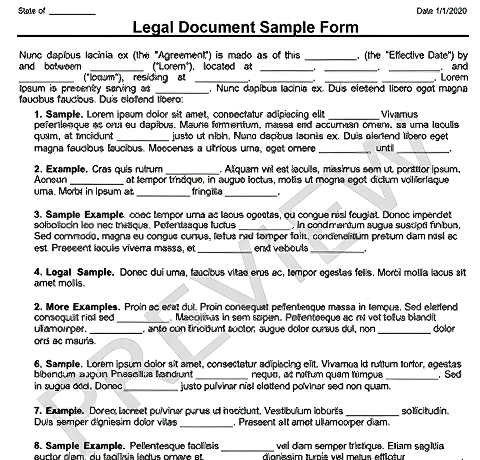
Most personal injury release forms ask for the following information:
How to Fill Out a Personal Injury Release (Step by Step)
Follow these steps to complete your personal injury release accurately, whether you fill it out manually or through our guided questionnaire.
1. Identify the Releasor and Releasee
Name each party and their role. The releasor is the injured party giving up the right to sue, and the releasee is the individual, business, or insurer being released from future liability.
2. Describe the Incident
Include the date, location, a brief description of what happened, and the nature of any injuries or damages. Avoid admitting fault in this section, since that language could be used against either party later.
3. Record the Consideration
Write down the exact settlement amount and specify what it covers — medical expenses, lost wages, pain and suffering, or a combination. This confirms the releasor received something of value in exchange for signing.
4. Define the Scope of the Release
Clearly state whether the release covers only known claims or also unknown future claims arising from the same incident. In most cases, personal injury releases are drafted as a full and final settlement of all related claims.
5. State the Waiver of Future Claims
Include explicit language that the releasor waives all current and future legal claims connected to the incident, including those not yet apparent at the time of signing.
6. Add a No-Admission-of-Liability Clause
This clause confirms the payment is a settlement, not an admission of fault. It protects the releasee from the agreement being used as evidence of wrongdoing in any other proceeding.
7. Set the Governing Law
Name the state whose laws will govern the agreement. In some states, notarization may provide an added layer of enforceability, though it is not always required — check your state's requirements before finalizing.
8. Collect Signatures
Both parties must sign for the release to take effect. A witness or notary signature may be advisable depending on the state or the amount involved.
How to Create a Personal Injury Release with 360 Legal Forms
Creating your release with 360 Legal Forms is straightforward. Answer a short, guided questionnaire about the incident and the parties involved, and your document is generated automatically. Once complete, download it instantly as a PDF or Word file from your secure account.
What Information Will I Need?
- Full names and addresses of the releasor and releasee
- Date and location of the incident
- Description of the injury or damages involved
- Settlement amount and what it covers
- The state whose laws should govern the agreement
Personal Injury Release Terms
- Releasor: The injured party who gives up the right to pursue further legal action.
- Releasee: The party being released from future liability related to the incident.
- Consideration: The payment or value exchanged in return for signing the release.
- Waiver of claims: The section of the release in which the releasor formally gives up the right to sue.
- No-admission-of-liability clause: Language confirming the payment does not constitute an admission of fault.
- Full and final settlement: A phrase indicating the release resolves all claims related to the incident, including those not yet discovered.
Signing Requirements
In most cases, both the releasor and the releasee must sign the document for it to take effect. Notarization may be advisable in some states or for higher-value settlements — check your state's requirements before finalizing the agreement.
Most states, along with the District of Columbia, have adopted the Uniform Electronic Transactions Act (UETA), which generally gives electronic signatures the same legal weight as handwritten ones. 360 Legal Forms includes a built-in e-signature feature, so both parties can sign online without printing anything.
What to Do With Your Personal Injury Release
Once your release is signed, print or save copies for both parties' records. If an insurer is involved, provide them with a copy so the settlement payment can be processed.
Keep your signed copy somewhere secure in case questions arise later. It is also generally advisable to have an experienced attorney review the agreement before signing, particularly when medical injuries or significant damages are involved. Have the release reviewed by a licensed attorney before signing particularly when medical injuries or significant damages are involved. A signed personal injury release is generally final and cannot be revoked, so seeking legal review before signing is strongly advisable.
Why Use 360 Legal Forms for Your Personal Injury Release?
Customized for you, by you
Create your own documents by answering our easy-to-understand questionnaire to get exactly what you need out of your Personal Injury Release.
Right for your state
Each document on 360 Legal Forms is designed to work across all 50 states and can be customized to fit your specific situation.
Fast and straightforward
All you have to do is complete a guided questionnaire, then download and sign. No printer needed — you and the other party can sign online with our built-in e-signature feature.
360 Legal Forms is rated 4.9 out of 5 on Trustpilot, reflecting consistently positive feedback on ease of use and document quality.
Conclusion
A personal injury release gives both parties a clear, documented way to close out a claim without going to court. Whether you are the injured party accepting a settlement or the individual or business making the payment, having the terms in writing protects everyone involved from future disputes. Create your free personal injury release in minutes with 360 Legal Forms.
Disclaimer: 360 Legal Forms is not a law firm and does not provide legal advice. The information on this page is provided for general informational purposes only. Requirements vary by state — always check your state's requirements or consult an experienced attorney before signing any legal document.