

Key Takeaways - A business promissory note is a legally binding written promise by a business to repay a specific loan under agreed-upon terms. - It is more streamlined than a full loan agreement and is generally sufficient for most commercial lending situations. - A secured note is backed by collateral; an unsecured note is not. - Both the lender and borrower should keep a signed copy — no government filing is required in most cases. - Clear default terms written into the note strengthen the lender's options if repayment fails.
What Is a Business Promissory Note?
A business promissory note is a financial and legal document that creates a documented debt between a commercial borrower and a lender. It is more formal than a verbal agreement or an IOU and more streamlined than a full loan agreement. Under UCC (Uniform Commercial Code) Article 3 — adopted in all 50 states — a promissory note that meets certain requirements qualifies as a negotiable instrument, meaning the lender may, in some cases, transfer the right to collect repayment to a third party.
Business promissory notes fall into two broad categories. A secured business promissory note is backed by collateral — a business asset the lender may claim if the borrower defaults. An unsecured note carries no such claim over the borrower's assets.
Other Names for a Business Promissory Note
Depending on your state or context, a business promissory note may also be called:
- Commercial Promissory Note
- Business Loan Note
- Note Payable
- Commercial Paper (in specific financial contexts)
- Demand Note (when no fixed repayment date is set)
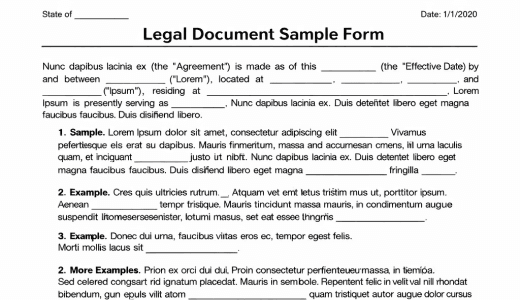
360 Legal Forms generates the correct form for your situation automatically based on your questionnaire answers.
Business Promissory Note Terms
- Principal: The original loan amount the borrower agrees to repay.
- Interest Rate: The percentage charged on the outstanding balance; most states set usury limits on the maximum rate allowed.
- Amortization: How a loan is spread across scheduled payments covering both principal and interest.
- Collateral: An asset pledged by the borrower that the lender may claim if the borrower defaults.
- Acceleration Clause: Allows the lender to demand full repayment immediately upon a default event.
- Personal Guarantee: A provision in which a business owner personally agrees to repay the debt if the business cannot.
- Default: The condition of failing to meet the repayment terms as set forth in the note.
- Consideration: Something of value exchanged between the parties — typically the loan amount itself — that makes the note legally enforceable.
Who Needs a Business Promissory Note?
Any business that borrows money — or lends it — should document the transaction with a signed business promissory note. Common use cases include:
- Startup or growth financing — formalizing a loan from a private investor or business partner
- Owner or shareholder loans — documenting money a business owner lends to their own company
- Vendor or supplier deferred payment — structured payment terms between two businesses
- Equipment or inventory purchases — overtime payment between private commercial parties
- Business acquisition financing — recording seller-financed portions of a purchase price
In most cases, a business promissory note is not the right document when the loan is governed by a more comprehensive agreement (such as an SBA or institutional loan), when multiple borrowers are involved on complex terms, or when real estate is used as collateral — in those situations, pair the note with a Mortgage Agreement or Deed of Trust.
Why Use 360 Legal Forms for Your Business Promissory Note?
Customized for you, by you
Create your document by answering our straightforward questionnaire. Every detail — loan amount, interest rate, repayment schedule, collateral, and default terms is tailored to your situation.
Right for your state
Each document on 360 Legal Forms is designed to work across all 50 states and is reviewed by experienced attorneys. Select your state and the correct form is generated for you.
Fast and secure
Fill out the questionnaire, download your form instantly as a PDF or Word document, and sign — or use the built-in e-signature option. 360 Legal Forms is rated 4.9 out of 5 on Trustpilot, reflecting consistently positive feedback on ease of use and customer support. Your document is stored securely in your private account.
How to Create a Business Promissory Note with 360 Legal Forms
360 Legal Forms makes it straightforward to generate an attorney-vetted business promissory note without hiring a lawyer. Answer the questionnaire, and we'll assemble your document based on your answers. Once complete, download it instantly as a PDF or Word file from your secure account.
What Information Will I Need to Create My Business Promissory Note?
- Lender Information: Full legal name and address of the lender — individual or business entity.
- Borrower Information: Full legal name and address of the borrowing business.
- Business Entity Type: Whether the borrower is a sole proprietor, LLC, corporation, or partnership.
- Principal Amount: The total loan amount.
- Interest Rate: The rate charged on the outstanding balance, if any. Check your state's usury limits.
- Payment Plan: How and when repayment is made in installments, as a lump sum, or on demand.
- Default Conditions: What happens if the borrower fails to repay, including who bears legal costs.
- Collateral (if secured): Description of any business assets pledged as security.
- Personal Guarantee (if applicable): Whether a business owner is personally guaranteeing the debt.
- Governing State: The state whose laws apply to the note.
- Dispute Resolution: Whether disputes are resolved through arbitration or the court system.
Business Promissory Note Signing Requirements
A business promissory note must be signed by an authorized representative of the borrowing business — someone with the legal authority to bind the company. In most cases, the lender's signature is also required.
Notarization is generally not required for a business promissory note to be enforceable. Most states, plus the District of Columbia, have adopted the Uniform Electronic Transactions Act (UETA), which generally gives electronic signatures the same legal weight as handwritten ones. 360 Legal Forms includes a built-in e-signature feature, so both parties can sign online without printing anything.
What to Do With Your Business Promissory Note
You do not need to file a business promissory note with any state or government agency. Both the lender and borrower should retain a signed copy in their records.
If the borrower does not repay as agreed, the recommended first step is generally to send a formal written demand for payment. If payment is still not made, the lender may pursue legal action through a civil suit or — for secured notes — may have the right to claim the collateral specified in the note. The specific remedies available depend on the terms written into the note and the laws of the governing state.
Conclusion
A business promissory note gives both the lender and borrower a clear, enforceable record of the loan terms — without the complexity of a full loan agreement. Whether you are formalizing a partner's investment, documenting an owner loan, or setting up vendor payment terms, putting the agreement in writing protects both sides if questions arise later. Create your free business promissory note in minutes with 360 Legal Forms.
Disclaimer: 360 Legal Forms is not a law firm and does not provide legal advice. The information provided is for general informational purposes only. Consult a licensed attorney for advice specific to your situation.
Bibliography
- U.C.C. Article 3 — Negotiable Instruments, Legal Information Institute, Cornell Law School