

Key Takeaways 1. An employment contract is a written agreement that outlines job duties, pay, work schedule, and termination terms. 2. While not legally required in most U.S. states, having a written contract helps protect both employers and employees. 3. Common types include at-will, fixed-term, temporary, and part-time agreements. 4. A good employment contract covers key details like salary, benefits, probation period, confidentiality, and termination terms. 5. Both parties must sign the agreement for it to be legally enforceable. Notarization is usually not required. 6. Any updates to the agreement should be made in writing through an amendment. 7. With 360 Legal Forms, you can quickly create and download a free employment contract template in PDF or Word
What Is an Employment Contract?
An employment contract, also called an employment agreement, work agreement, or contract of service, is a legally binding document that records the rights and obligations of both an employer and an employee. Once signed by both parties, it governs the working relationship for the duration stated in the document.
An employment agreement is not just a formality. It establishes what the employee is expected to do, what they will be paid, and what happens if either party wants to end the relationship. For employers, it provides legal protection if the employee violates their obligations, such as sharing confidential information or failing to meet performance standards. For employees, it confirms what they have been promised and gives them a written basis for holding the employer accountable.
A written employment agreement is separate from an employee handbook. A handbook sets company-wide policies and expectations, but it is generally not a binding legal document and applies to all employees equally. An employment agreement is unique to each employee and is legally enforceable once signed.
Other Names for an Employment Contract
Depending on the context, an employment contract may also be referred to as:
- Employment Agreement
- Work Agreement
- Job Agreement
- Contract of Employment
- Contract of Service
- Staff Agreement
- Employment Form
- Offer Letter (note: an offer letter is typically a precursor to a formal contract, not a substitute for one)
Regardless of the name used, the legal function is the same, to document the agreed terms of employment and protect both parties.
Who Needs an Employment Contract?
Any employer hiring a worker on agreed terms can benefit from a written employment agreement. While it is most commonly associated with full-time, salaried positions, an employment contract is useful in a wide range of employment situations:
- Employers, including small business owners, sole proprietors, and growing companies, use employment agreements as part of a broader business legal document service to protect trade secrets, define performance expectations, and reduce legal risk in the event of disputes after hiring.
- Employees, from full-time professionals to part-time workers and remote staff, benefit from a written agreement because it confirms the terms they were offered and prevents the employer from unilaterally changing conditions without notice.
- Freelancers and independent contractors work under a different type of document, typically an independent contractor agreement, which does not carry the same benefits, protections, or employer obligations as a standard employment agreement. If you are unsure whether someone should be classified as an employee or an independent contractor, the U.S. Department of Labor provides guidance on worker classification under the Fair Labor Standards Act. Whatever your hiring situation, our legal document management library has the right form, from employment agreements to contractor forms and beyond.
A notable consideration: in the United States, most employment is at-will by default, meaning either party can end the relationship at any time without cause, unless the contract specifies otherwise. A written agreement clarifies whether the position is at-will or fixed-term, which helps avoid misunderstandings about termination rights.
Types of Employment Contracts
Not every role requires the same type of employment agreement. Here are the most common types:
- At-Will Employment Agreement: Either the employer or employee can end the arrangement at any time, for any lawful reason, without advance notice. Most U.S. states default to at-will employment, including a clear at-will clause in the agreement, which prevents termination disputes later.
- Fixed-Term Employment Agreement: A fixed-term agreement, also called a permanent employment contract, sets a defined start and end date, commonly used for project-based roles, seasonal positions, or executive hires. Fixed-term employees may transition to permanent status if the term is extended without a new agreement.
- Temporary or Seasonal Employment Agreement: A temporary employment contract covers short-term roles such as holiday retail, event staff, or agricultural workers, with a clearly defined duration. Benefits may or may not be included depending on the employer and applicable state law.
- Part-Time Employment Agreement: Governs workers employed for fewer than the standard full-time hours, typically under 35 hours per week. The agreement should state expected hours, pay rate, benefit eligibility, and whether the schedule is fixed or variable.
- Employee vs. Independent Contractor, Key Differences: Employees have taxes withheld, receive employer-managed benefits, and are protected under the Labor Standards Act; independent contractors are not. Misclassifying an employee as a contractor is a significant legal risk; always verify classification with your state's rules before finalizing any arrangement.
What Does an Employment Contract Include?
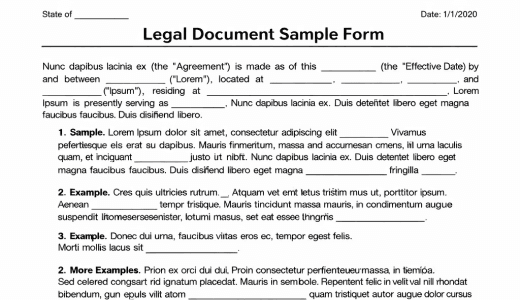
A complete employment contract template should cover the following fields. Each one plays a specific role in defining the employment relationship and protecting both parties:
How to Draft an Employment Contract
Drafting a clear and complete employment agreement protects both parties from the start. Follow these steps to create a legally sound document:
Step 1: Identify the Parties
Write the full legal names and addresses of both the employer and the employee. If the employer is a business entity, use the registered business name exactly as it appears in official records. If the employer is an LLC or corporation, the authorized representative signing on behalf of the company should also be identified by name and title.
Step 2: Define the Role and Responsibilities
State the employee's job title and a clear description of their responsibilities. Be specific, a vague job description creates room for disagreement about what the employee is expected to do. Include reporting structure, key performance expectations, and any specific deliverables where applicable.
Step 3: Outline Compensation and Benefits
State the agreed salary or hourly wage, the payment frequency (weekly, bi-weekly, semi-monthly, or monthly), and the payment method. Include a full description of benefits: health insurance, paid time off, sick leave, 401(k) matching, bonuses, expense reimbursement, and any other perks.
Under federal wage and hour law, covered non-exempt employees must be paid at least the federal minimum wage ($7.25/hour). If your state's minimum wage is higher than the federal rate, the higher amount applies, check the state minimum wage requirements before finalizing compensation terms.
Step 4: Set the Term and Termination Conditions
Specify whether the agreement is at-will or fixed-term. For at-will agreements, include a clear statement that either party may end the relationship at any time for any lawful reason. For fixed-term agreements, include the start and end dates and the conditions under which either party may terminate early.
Define the notice period required for resignation and termination, any severance terms, and whether any restrictions (such as a non-compete clause) apply after employment ends. Be specific about what qualifies as a cause for termination.
Step 5: Add Protective Clauses
Include any additional clauses relevant to the role:
- Confidentiality clause: Prevents the employee from sharing proprietary information; often supplemented by a standalone employee non-disclosure agreement
- Non-compete clause: Restricts post-employment activity with competitors; enforceability varies by state, check your state's rules before including
- Non-solicitation clause: Prevents the departing employee from poaching clients or colleagues
- Arbitration clause: Requires disputes to be resolved through arbitration rather than litigation; must be clearly worded and mutually agreed upon
- Intellectual property clause: Assigns ownership of work product created during employment to the employer
Signing Requirements
An employment agreement generally becomes legally binding once both the employer and the employee have signed and dated the document. In most states, notarization is not required, and a witness is generally not needed, though adding one is never a disadvantage. Both parties should receive a signed copy. If your company has an HR department, the signed document should be added to the employee's file.
How to Negotiate an Employment Contract
Most people assume employment agreements are take-it-or-leave-it documents. In practice, many terms are open to discussion, particularly for professional or managerial roles. Here is what both sides should know:
What is typically negotiable:
- Base salary, the most commonly negotiated term; supported by market data (Bureau of Labor Statistics occupational wage data is a useful reference)
- Signing bonus, a one-time payment to offset what the employee is leaving behind at their previous role
- Start date, particularly if the employee needs time to serve a notice period elsewhere
- Benefits and perks, including remote work options, additional PTO, professional development budgets, or flexible hours
- Non-compete scope, both the duration and the geographic scope of a non-compete clause are often negotiable; overbroad terms may be unenforceable anyway
- Probationary period length, can sometimes be shortened for experienced hires
- Severance terms, particularly relevant for senior roles
For employees: Request the offer in writing before negotiating. Review every clause, not just the compensation clause. If a non-compete clause is included, ask to narrow its scope or duration.
For employers: Reasonable, clearly scoped terms are more likely to be signed without friction, and more likely to be enforceable if challenged. Overly broad restrictions may be struck down by courts in many states.
Any term agreed upon during negotiation should be documented in the final signed agreement, verbal side agreements are generally not enforceable.
What Happens If an Employment Contract Is Breached?
A breach of an employment agreement occurs when one party fails to fulfill a material obligation under the document. Either side can breach, employers and employees alike.
- Common employer breaches include: failing to pay the agreed salary, terminating the employee without cause when the agreement specifies a fixed term, or requiring the employee to perform duties outside the scope of the agreed job description.
- Common employee breaches include: resigning without the required notice period, disclosing confidential company information in violation of an NDA clause, or joining a competitor in violation of a non-compete clause.
Remedies typically available to the non-breaching party:
- Monetary damages, compensation for the financial harm caused by the breach
- Specific performance, a court order requiring the breaching party to fulfill their contractual obligation (less common in employment contexts)
- Injunctive relief, a court order to stop the breaching behavior (commonly sought in non-compete and NDA violations)
Many employment agreements include an arbitration clause, which requires disputes to be resolved through private arbitration rather than a court lawsuit. If an arbitration clause is present, litigation is generally not available as a first remedy.
If you believe your employment agreement has been breached, the first step is to review the document carefully, particularly the dispute resolution, notice, and remedy clauses. Consulting a licensed employment attorney is advisable in cases of significant breaches.
Can an Employment Contract Be Modified?
Yes, an employment agreement can generally be modified after it has been signed, provided both parties agree to the changes in writing. Unilateral modifications, changes made by only one party without the other's consent, are generally not enforceable.
Common reasons to modify an existing employment agreement include:
- A salary increase or a change in compensation structure
- A change in job title or responsibilities
- A promotion or change in reporting structure
- An extension of a fixed-term agreement
- A change to the non-compete scope or duration
The correct way to modify an existing employment agreement is to create an employment agreement amendment, a short, signed document that clearly states what terms are being changed and what the new terms are. The amendment does not replace the original agreement; it supplements it. Both parties should sign the amendment and receive a copy.
Verbal agreements to modify employment terms are generally difficult to enforce. If something changes, get it in writing.
Remote and Hybrid Work Provisions to Consider
As remote and hybrid work arrangements become more common, employment agreements increasingly need to address conditions specific to off-site work. If a role is partly or fully remote, consider adding provisions that cover:
- Work location, whether the employee is authorized to work from home, a co-working space, or a specific geographic area
- Equipment and technology, who provides the hardware and software required to do the job
- Home office stipend, whether the employer contributes to internet, phone, or workspace costs
- Data security obligations, the employee's responsibility to protect company data when working outside a secured office environment
- Availability and communication expectations, core hours, response time standards, and time zone considerations
Remote work provisions are still emerging in employment law across many states. Check your state's requirements before finalizing any remote-specific terms.
Why Use 360 Legal Forms for Your Employment Contract?
1. Customized for You, By You
Answer a few straightforward questions, and our proprietary form generator builds a general employment contract tailored to your specific role, employment type, and state. No legal jargon, just clear, enforceable language.
2. Right for Your State
Each document on 360 Legal Forms is designed to work across all 50 states and can be customized to fit your situation. Our forms reflect common legal standards so both parties can feel confident in what they are signing.
3. Fast and Straightforward
Complete our guided questionnaire, then download your free employment contract as a PDF or Word document from your secure account. No printer? No problem, use our built-in e-signature tool to sign online in seconds.
How to Create an Employment Contract with 360 Legal Forms
By answering a few questions about the nature of the employment, 360 Legal Forms' proprietary form generator will create an employment contract sample tailored to your conditions and jurisdiction. The process is fast and straightforward. All you have to do is complete our guided questionnaire. Once complete, download your form as a free employment contract PDF or Word document from your secure online account.
What Information Will I Need?
To create your employment agreement, please have the following ready:
- Employer: Full legal name, business address, and the name of the authorized signatory
- Employee: Full legal name and current address
- Start Date: The date the employee is expected to begin
- Job Title and Responsibilities: A clear description of the role and its key duties
- Employment Type: At-will, fixed-term, temporary, or part-time
- Compensation: Salary (annual) or hourly wage, payment frequency, and payment method
- Benefits: Health insurance, PTO, sick leave, retirement benefits, and any other perks
- Work Schedule: Standard hours and days, including any shift or overtime expectations
- Probationary Period: Duration of any trial period, if applicable
- Protective Clauses: Whether to include a confidentiality clause, non-compete clause, non-solicitation clause, or arbitration clause
- Termination Terms: Grounds for termination and required notice period
- Governing Law: The state whose laws apply to the agreement
Employment Contract Terms
- At-Will Employment: An employment arrangement where either the employer or the employee may end the relationship at any time, for any lawful reason, without advance notice, unless the agreement specifies otherwise. Most U.S. states default to at-will employment.
- Fixed-Term Agreement: An employment agreement with a defined start and end date. The agreement ends on the specified date unless extended by mutual consent.
- Probationary Period: A defined trial period at the start of employment, typically 30 to 90 days, during which the full terms of the contract may not yet be in effect, and the employee may be released if performance standards are not met.
- Non-Compete Clause: A clause that forbids the employee from working for competing businesses or starting a competing business for a specified period and geographic area after employment ends. Enforceability varies significantly by state.
- Non-Solicitation Clause: A clause that prevents a departing employee from recruiting colleagues or soliciting the employer's clients for a defined period after leaving.
- Confidentiality Clause: A provision requiring the employee not to disclose proprietary company information, such as trade secrets, client lists, or financial data, during or after employment. Often supplemented by a standalone employee non-disclosure agreement.
- Arbitration Clause: A provision requiring disputes between the employer and employee to be resolved through private arbitration rather than a court lawsuit.
- Severance: Compensation paid to an employee upon termination, typically in exchange for a release of legal claims.
- Fringe Benefit: Any non-monetary benefit received by an employee beyond base pay, such as health insurance, a company vehicle, or stock options.
- Agency Provision: A clause in an employment agreement that prohibits the employee from entering into agreements on behalf of the employer without explicit authorization.
- Atypical Worker: Any worker who does not follow a standard full-time work schedule, including shift workers, part-time employees, agency workers, and remote workers with non-standard hours.
What to Do After Signing Your Employment Contract
Once both parties have signed the employment agreement:
- Distribute signed copies, the employer and employee should each receive a fully signed copy immediately. If the employer has an HR department, it should add it to the employee's personnel file.
- Store it securely, both parties should keep the signed document in a safe location. Employees are advised to keep a digital backup as well.
- Include it in the onboarding packet, employers should provide the signed agreement alongside any relevant supplementary documents, including the employee handbook, confidentiality agreement, and any applicable non-compete or NDA forms.
- Note any expiration or review dates, for fixed-term agreements, calendar the end date. For at-will agreements, note any scheduled review dates for compensation or performance.
- Document any future changes in writing, if terms change at any point, use an employment agreement amendment to record the modification. Verbal changes are generally difficult to enforce.
Conclusion
An employment contract protects both employers and employees by putting agreed terms clearly in writing before work begins. Whether you are hiring your first employee or formalizing a part-time role, a signed agreement reduces disputes and sets clear expectations. Create a free employment contract template at 360 Legal Form, attorney-vetted, downloadable as PDF or Word, and signable online in minutes. Need more business documents? Browse our full library of business contract templates to cover every stage of your business.